a Better Bubble™

Aggregator

GOP candidate says Missouri lawmaker is suing him over disclosure of court records

2 years 3 months ago

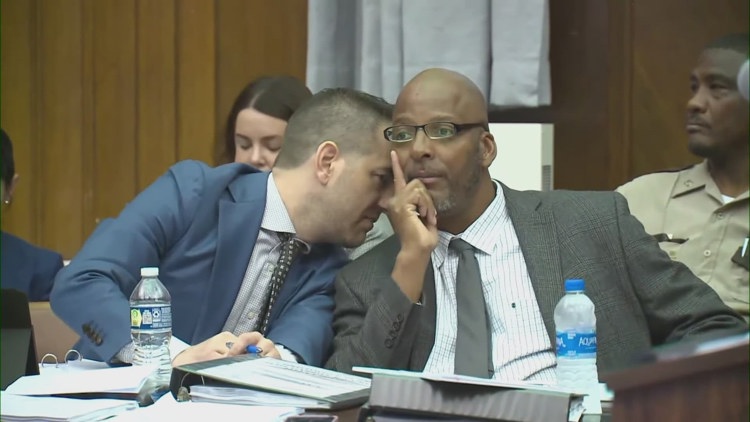
A Republican running for the Missouri House says he’s being sued by state Rep. Justin Hicks, the lawmaker he’s hoping to replace, for publishing information on a campaign website about a 2010 order of protection issued when a woman accused Hicks of choking her. Hicks is leaving the legislature to run for Congress. The lawsuit […]

The post GOP candidate says Missouri lawmaker is suing him over disclosure of court records appeared first on Missouri Independent.

Rudi Keller

Customer Service Company That Worked With Disney, Comcast Will Pay $2M to Workers to Settle Lawsuit Over Pay Practices

2 years 3 months ago

ProPublica is a nonprofit newsroom that investigates abuses of power. Sign up to receive our biggest stories as soon as they’re published.

Arise Virtual Solutions, a work-at-home customer service company, will pay $2 million to workers in the District of Columbia to settle a lawsuit alleging the company failed to pay minimum wage and overtime.

The company, which did not admit wrongdoing, will pay an additional $940,000 to the District of Columbia in civil penalties and stop operating there.

The lawsuit by the D.C. attorney general was sparked by a 2020 ProPublica investigation that revealed how Arise required workers to pay for the company’s training as well as monthly fees in order to take customer service calls on its “platform.” The workers, who are mostly women and work from home, answer customer calls for major corporations such as Comcast and Disney, which contract with Arise.

The company classifies the workers as “independent contractors,” like Uber drivers. Such classification allows the company not to pay minimum wage or offer other labor protections. Customer service representatives told ProPublica, however, that the idea that they were independent was largely a fiction. Arise and the large corporations for whom they answered calls maintained a high level of control over their jobs.

“This settlement puts more than $2 million into the pockets of workers Arise took advantage of in a misclassification scheme — an illegal practice that is, unfortunately, all too common in the District,” D.C. Attorney General Brian Schwalb said.

That money will be distributed among more than 250 workers in the district. Specific payouts will depend on several factors, including how much unpaid time each person worked.

Arise, which is based in Miramar, Florida, is owned by private equity giant Warburg Pincus. In a statement, an Arise spokesperson said: “While we disagree with the office of the Attorney General’s allegations, and their efforts to deprive business owners in the District of the economic opportunities that the Arise Platform provides, we are pleased to have resolved this matter and we will continue to move our business forward outside of the District.”

The company is facing a separate lawsuit filed by the U.S. Department of Labor in federal court in Florida last year. The government accused Arise of misclassifying more than 22,000 employees as independent contractors. The Labor Department’s lawsuit, which asks the court to force Arise to pay those workers back wages and damages, “may be the largest misclassification case in its history,” an agency news release says.

A Labor Department spokesperson said the agency had no comment on the case, saying it’s still in litigation.

In its complaint, the Labor Department recounts much of the litigation history against Arise that ProPublica reported on in its initial story, noting, for example, that two separate arbitrators have found that the company treated employees as independent contractors. One agent in the Arise network who won in arbitration, Tami Pendergraft, paid about $1,500 for home office equipment, paid for a background check and training, devoted 44 unpaid days to passing a certification course, and then worked three weeks fielding telephone calls from AT&T customers. After all that, she got a single paycheck for $96.12.

Arise, in court records, denied the Labor Department’s allegation that it misclassifies workers. Referring to the agents as “service partners,” Arise says they are independent contractors who “control their service schedules and have flexibility to provide customer support services to clients whenever and wherever they want to service.”

“This independent contractor model,” Arise writes in court records, “has benefitted many groups who have been poorly served by a regimented employment model, including disabled individuals, veterans, caregivers, and others who particularly benefit from such flexibility.”

The Arise spokesperson said the company disagrees “with the Department of Labor’s efforts to take away the opportunities that the Arise Platform provides. We have and will continue working with the Department of Labor to answer questions and illustrate how we appropriately use the independent contractor relationship to protect flexibility and increase economic opportunity.”

by Justin Elliott and Ken Armstrong

Manileño Offers Filipino Cuisine in a Sunny Space off South Grand

2 years 3 months ago
There’s something about Manileño that has us really hoping it does well. It might be the smiley faces of the family who runs it; it might be the grit and determination behind the realization of a dream, and it could much more simply be the food. This Filipino restaurant opened in mid-February at 3611 Juanita Street, just off South Grand Boulevard, in the Tower Grove South neighborhood of St. Louis.
Alexa Beattie

Vegan Deli & Butcher Is Even Better Than the Meat Thing

2 years 3 months ago
Chris Bertke has a tendency to look frazzled, but if you watch him at work in his new open kitchen on the high-trafficked crook of Morgan Ford and Gravois, there's a grace and calm about him. He's delicate with his herbs, he slices his subs and breads gently.
Alexa Beattie

Cardinals tickets are only $3.14 for 314 Day

2 years 3 months ago
ST. LOUIS -- To mark "314 Day" the St. Louis Cardinals are offering fans tickets at a steep discount. The flash sale will take place on Thursday, March 14, 2024, with tickets for just $3.14. This 12-hour flash sale, running from 9 a.m. to 9 p.m., will allow fans to buy tickets for select Cardinals [...]
Joe Millitzer

One woman killed, another injured in separate St. Louis shootings

2 years 3 months ago
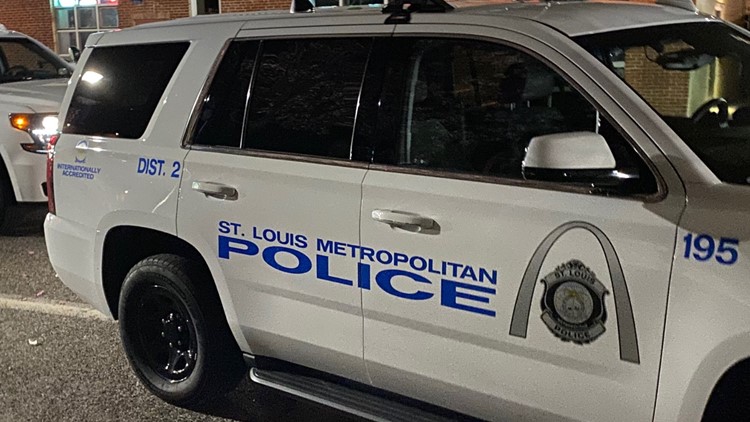
ST. LOUIS -- Two separate shootings occurred in North St. Louis, resulting in one woman's death and another woman being injured. As of now, authorities have not identified any suspects in connection with either incident. The first shooting took place on the 4600 block of Pope in the Penrose neighborhood. Police were called to the [...]
Chris Regnier

Two rounds of storms expected near St. Louis Thursday

2 years 3 months ago
Storms look to redevelop mid- to late afternoon and continue through the evening hours. All modes of severe weather will be possible. Storms look to exit the region by midnight, with maybe just a few lingering sprinkles.
Jaime Travers

Virginia Lawmakers Approve Commission to Examine Universities’ Displacement of Black Communities

2 years 3 months ago

This article was produced for ProPublica’s Local Reporting Network in partnership with the Virginia Center for Investigative Reporting at WHRO. Sign up for Dispatches to get stories like this one as soon as they are published.

The Virginia legislature has approved creating a statewide commission to investigate the role of public colleges and universities in displacing Black communities.

The legislature’s action represents a milestone for the budding national movement to seek compensation for families dispossessed by university expansion. It follows a 2023 series by ProPublica and the Virginia Center for Investigative Journalism at WHRO, which showed that universities nationwide have uprooted tens of thousands of families of color, contributing to Black land loss and lagging rates of Black home ownership. The series, which detailed how the creation and expansion of Christopher Newport University in Newport News, Virginia, swallowed up a Black neighborhood, spurred city and university leaders there to create a similar task force in January.

The state budget passed by the legislature Saturday would establish a commission to determine whether any public institution of higher education in Virginia “has purchased, expropriated, or otherwise taken possession” of properties in Black neighborhoods to establish or expand a campus, and whether compensation would be “appropriate” for the property owners or their descendants, according to the bill. The commission will also research similar acquisitions in other states to provide context. The panel would report its findings annually to the legislature and submit final recommendations by July 2027. National higher education groups said they are unaware of any other statewide commissions studying the issue.

The Virginia commission would include 10 legislators, the state’s two top education officials and seven members of the public. Gov. Glenn Youngkin has until April 17 to sign the budget; he could also veto specific line items such as the commission’s funding, which consists of $28,760 per year for members’ expenses. Commission staff will be paid separately by the state Division of Legislative Services.

“My country has gone from uprooting Black communities violently to legally doing it,” the Rev. Robin D. Mines, a Richmond minister, testified at a legislative hearing last month in support of the provision. “It is far past due time to do something about this and bringing hope to our communities.”

By documenting the confiscation and destruction of Black neighborhoods for higher-education facilities, the ProPublica-VCIJ series added to the debate over how universities address the legacy of racial injustice — both on their campuses and in the country as a whole. Numerous universities are grappling with their racial histories, even as red states are restricting classroom discussion of critical race theory, which holds that racism is ingrained in America’s laws and power structures.

Del. Delores McQuinn, a Richmond Democrat, introduced legislation in January to create the commission. McQuinn originally proposed allocating $150,000 a year, which was reduced in the conference committee process after her bill was inserted into the budget. She said she would request more funding if needed.

McQuinn, who will be a member of the commission, said she will seek input from other legislators, historians and families affected by university expansion. She said the commission would address “how we repair some of the damage that has been done, whether it is through actual dollars, or scholarships or other kinds of ways.”

She declined to speculate on whether the governor would veto the commission. Youngkin, a Republican, issued an executive order in 2022 to end the use in K-12 schools of what he called “inherently divisive concepts,” including critical race theory, which is more commonly taught in colleges and graduate schools. In a statement Saturday after the legislative session ended, Youngkin said that the legislature “sent me more than a thousand bills plus backward budgets that need a lot of work,” and that he would review and decide on them in the next 30 days.

In the past two decades, prominent universities including Harvard, Yale, Brown and the University of Virginia have issued extensive mea culpas describing their historical involvement with the slave trade and slave owners. In Virginia, a 2021 law required UVA and four other universities that were established before the Civil War and used enslaved laborers to search for descendants and make reparations through scholarships or community-based economic development and memorial programs.

The 2020 protests over the murder of George Floyd prompted more institutions to reexamine their history of racial injustice. Still, only a few universities have reckoned with the impact of their growth on communities of color. In 2022, Colorado lawmakers allocated $2 million in scholarships for families and descendants of the Auraria community in Denver. The establishment of the University of Colorado at Denver campus in the early 1970s and its subsequent growth displaced 350 families and reduced the predominantly Hispanic neighborhood to just 13 cottages and a grocery store. The scholarship program eliminates fees and tuition for students and families who lived in the community between 1955 and 1973.

In Athens, Georgia, former residents of the Linnentown neighborhood have sought redress for the taking of their community by eminent domain to develop dormitories for the University of Georgia in the early 1960s. Researchers estimated the property seizures cost Black families $5 million in current dollars, mostly due to underpayment for the land.

Commissioners in Athens-Clarke County, where that university is located, passed a resolution in 2021 urging the state to compensate the roughly 50 displaced families and their descendants. They set aside $2.5 million to build affordable housing and a community center. The University of Georgia, citing a state constitutional ban on voluntary public funding for third parties, has rejected the concept of reparations.

Virginia legislators began discussing redress for uprooted families in response to the ProPublica-VCIJ series and an accompanying documentary film, which both explored how Newport News’ all-white city council seized the core of a thriving Black community in and around Shoe Lane by eminent domain in the early 1960s to build Christopher Newport’s campus. City leaders wanted to “erase the Black spot” near a segregated country club. In the ensuing decades, the school acquired almost all of the remaining homes.

Following the first article in the series, Christopher Newport University President William Kelly acknowledged in a message to faculty and staff that the university’s progress “has come at a human cost, and we must continue to learn about and understand our complicated history.” Kelly, who became president last year, has also said that incoming freshmen will be taught at orientation about the college’s origins and evolution. In January, the city of Newport News and CNU announced a task force to review decades of property acquisitions and consider possible redress for displaced families.

Christopher Newport University has declined to comment to ProPublica or VCIJ on the joint local task force or the possible state commission.

Other Virginia state universities that absorbed Black communities have tried to make amends for their history. Old Dominion University’s expansion since the early 1960s diminished a once-thriving Black community in Norfolk called Lamberts Point. In the 1990s, the university established scholarships and a jobs program for current neighborhood residents.

A memorial on UVA’s campus acknowledges its centuries of mistreatment of Black people both during and after slavery, including employees and local residents. In 2020, UVA President Jim Ryan announced a goal to build as many as 1,500 affordable homes and apartments on property owned by the school and its affiliates. The housing would be open to residents outside the university community.

While the Virginia measure focuses on public universities because they were established by the state, private institutions have their own fraught history. The University of Richmond, for example, acknowledged in 2019 that part of the campus was built on top of a cemetery for enslaved persons. The university is planning a memorial to honor the people buried there.

McQuinn, the legislation’s sponsor, said that she has long been aware of the displacement of Black neighborhoods by universities, but that the ProPublica-VCIJ series spurred her to act. Several supporters of the proposal, including the heads of the statewide and Richmond chapters of the NAACP, attended the Feb. 9 subcommittee hearing in person or online.

Others submitted comments via the General Assembly’s portal. “I see an opportunity to right the wrongs of the past,” wrote a Richmond resident identifying himself only as Antoine. He added that the “pushback” against studying the history of racial injustice, like the university expansions themselves, is “reminiscent once again of the erasure of a culture.”

Louis Hansen contributed reporting.

by Brandi Kellam