 stLouIST
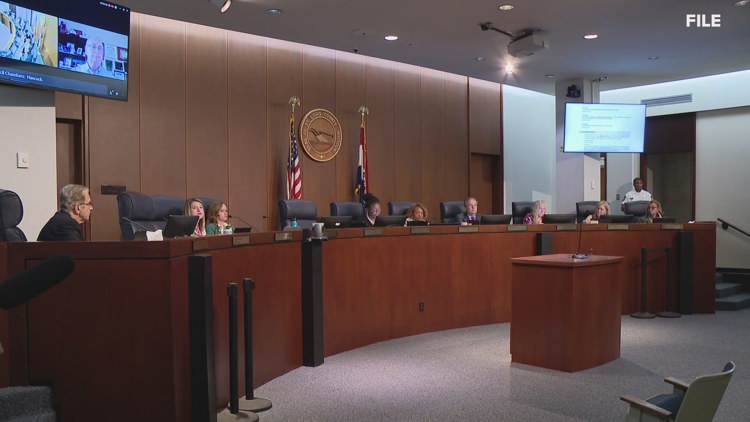
A man in jail bled to death with an untreated ulcer. His widow is suing St. Louis county.
The federal suit, filed Tuesday, says Katherine Jones' husband was in custody for just over three months when he died on March 6, 2023.
a Better Bubble™
ProPublica is a nonprofit newsroom that investigates abuses of power. Sign up to receive our biggest stories as soon as they’re published.
For a project explicitly designed to influence Congress, Steve Berger’s operation has left a scant paper trail. The archconservative evangelical pastor, who started a D.C. nonprofit a few years ago to shape national policy, does not file lobbying reports. His group does not show up in campaign finance records.
There is a simple way to glimpse his effort’s expanding reach in Washington, however: Pay attention to who is walking out the front door of his Capitol Hill townhouse. New evidence suggests Berger may be running what amounts to a group house for conservative lawmakers, with multiple members of Congress living with him at his organization’s headquarters.
The six-bedroom, $3.7 million home is owned by a multimillion-dollar Republican donor.
Rep. Andy Ogles, a Tennessee Republican who is among President Donald Trump’s most aggressive allies in Congress, has been at the house on multiple days over the past two weeks, according to people who live in the area. Video reviewed by ProPublica showed Ogles leaving the townhouse with bags on Feb. 27. As he left, he locked up the front door and pocketed the keys to the house.
As ProPublica reported last week, House Speaker Mike Johnson is living in the townhouse. And Dan Bishop, a former congressman from North Carolina now nominated for a powerful post in Trump’s White House, appears to have lived there until recently as well.
Berger has said his goal is to “disciple” members of Congress so what “they learn is then translated into policy.” He has claimed to have personally spurred legislation, saying a senator privately credited him with inspiring a bill.
Berger, Bishop and Ogles did not respond to requests for comment. A spokesperson for Johnson previously said the speaker pays fair-market rent for the part of the townhouse he occupies but didn’t answer questions about the specific rate. He said Johnson has not spoken to the pastor about “any matter of public policy.”
Ogles is in only his third year in Congress, but he’s drawn attention for his bombastic displays of fealty to Trump. He recently introduced a resolution to amend the Constitution so that Trump could serve a third term as president. He’s filed articles of impeachment against multiple judges who’ve ruled against the new administration. (Last week, Elon Musk posted a video of Ogles touting his impeachment efforts, set to the beat from the rap song “Shook Ones, Pt. II.”)
Ogles’ short tenure is also notable for the pace of scandal that’s followed it. He has faced allegations that he inflated his resume, claiming alternatively to have been an economist, a member of law enforcement and an expert on international sex trafficking, NewsChannel 5 in Nashville reported. (Ogles has acknowledged at least one mistake on his resume but said that “my body of work speaks for itself.”)
Last year, the FBI seized his phone during an investigation and obtained a search warrant to review records associated with his personal email address. Federal investigators were seeking evidence related to potential campaign finance violations, according to a court filing. The scope of the FBI investigation remains unclear.
Perhaps no one is more responsible for Ogles’ rise in politics than Lee Beaman, the Tennessee businessman who owns the Capitol Hill townhouse. When Ogles announced a short-lived Senate bid in 2017, Beaman said he planned to raise $4 million to support the run. Beaman, whose wealth derives from a large car dealership chain, then served as campaign treasurer in Ogles’ successful 2022 run for the House.
Rep. Andy Ogles appeared on stage at Steve Berger’s 60th-birthday party last year. (via Facebook)Beaman and Berger have publicly advocated together for numerous specific policy changes, in areas including foreign affairs, fuel efficiency standards and removing barriers to firing federal employees. After the 2020 election, they both signed a letter declaring that Trump was the rightful winner and calling for Congress to overturn the results. (Beaman did not respond to requests for comment. ProPublica could not determine whether he and the pastor have discussed policy issues with Ogles during his time in Congress.)
In sermons, Berger has devoted long stretches to attacking the separation of church and state, as well as COVID-19 vaccines. The pastor used violent language to describe his disdain for “LGBTQ+ Pride” parades and “drag queen story hour” during an interview for a podcast in 2022, according to unpublished footage obtained by ProPublica.
“If I was left to myself, I’d take a baseball bat and beat the hell out of every single one of them. And not feel bad about it,” Berger said. “I have to go, ‘You know what? That’s probably not the will of God, is it?’ And obviously it’s not.”
Beyond his ownership of the townhouse, Beaman’s role in the pastor’s influence project is unclear. After Beaman purchased the house in 2021, a lawyer sought to change it from a single-family dwelling to a “boarding house/rooming house,” according to Washington, D.C., property records. Around that time, Berger’s nonprofit group, Ambassador Services International, registered the home as its address.
Members of Congress are allowed to live anywhere, as long as they pay fair-market rent, experts said. Discounts on rent are generally seen as improper gifts and prohibited by House ethics rules.
Beaman has said he got to know Ogles when Ogles was the Tennessee director of Americans for Prosperity, part of the Koch brothers’ political network. Beaman and Ogles joined forces to fight a mass transit project in Nashville and reportedly worked together on a successful effort to repeal the estate tax in their home state. After leaving the Koch network, Ogles served four years as the mayor of a Middle Tennessee county with a population of roughly 100,000. He held that role until 2022, when he was elected to Congress.
Ogles’ 2022 campaign was the subject of a blistering House ethics report released this year. The nonpartisan Office of Congressional Ethics concluded that there is “substantial reason to believe” that Ogles’ campaign had accepted illegally large donations and then falsely reported that the funds had come from Ogles himself. Ogles has said he is “confident that any reporting problem was at worst an honest mistake.” (Beaman was not named in the report and has not been accused of wrongdoing.)
The report said that Ogles refused to cooperate with the investigation. It recommended that the House Ethics Committee issue a subpoena to the congressman.
Do you have any information we should know about Steve Berger, Rep. Andy Ogles or Speaker Mike Johnson? Justin Elliott can be reached by email at justin@propublica.org and by Signal or WhatsApp at 774-826-6240. Josh Kaplan can be reached by email at joshua.kaplan@propublica.org and by Signal or WhatsApp at 734-834-9383.
ProPublica is a nonprofit newsroom that investigates abuses of power. Sign up to receive our biggest stories as soon as they’re published.
This article is co-published with The Texas Tribune, a nonprofit, nonpartisan local newsroom that informs and engages with Texans. Sign up for The Brief Weekly to get up to speed on their essential coverage of Texas issues.
Over the last three years, the head of a small charter school network that serves fewer than 1,000 students has taken home up to $870,000 annually, a startling amount that appears to be the highest for any public school superintendent in the state and among the top in the nation.
Valere Public Schools Superintendent Salvador Cavazos’ compensation to run three campuses in Austin, Corpus Christi and Brownsville exceeds the less than $450,000 that New York City’s chancellor makes to run the largest school system in the country.
But Cavazos’ salary looks far more modest in publicly posted records that are supposed to provide transparency to taxpayers. That’s because Valere excludes most of his bonuses from its reports to the state and on its own website, instead only sharing his base pay of about $300,000.
The fact that the superintendent of a small district could pull in a big-time salary shocked experts and previewed larger transparency and accountability challenges that could follow as Texas moves to approve a voucher-like program that would allow the use of public funds for private schools.
Cavazos’ total pay is alarming, said Duncan Klussmann, an associate professor at the University of Houston Department of Educational Leadership & Policy Studies.
“I just can’t imagine that there’d be any citizen in the state of Texas that would feel like that’s OK,” Klussmann said.
Details concerning Cavazos’ compensation, and that of two other superintendents identified by ProPublica and The Texas Tribune, drew a sharp rebuke from the association that advocates for charter schools across the state.
“It’s not acceptable for any public school to prioritize someone’s personal enrichment ahead of students’ best interests,” Brian Whitley, a spokesperson for the Texas Public Charter Schools Association, said in a statement. He added that any payment decisions made at the expense of students should be reversed immediately.
“The public charter school community has long embraced strong accountability and transparency. That’s what Texans deserve, both for academic outcomes and taxpayer dollars,” he said. “To that end, the full picture of superintendent compensation at all public schools should be made clearer.”
Texas lawmakers have filed legislation that would cap public school superintendents’ annual salaries, but most bills would not restrict bonuses. Those bills also don’t apply to private schools that stand to receive an influx of taxpayer dollars if lawmakers pass legislation this session approving education savings accounts, a type of voucher program. Private schools wouldn’t be subject to the same level of state oversight as public schools.
Lawmakers who advocate for vouchers won’t be able to gauge whether the investments were worthwhile if they don’t mandate that private schools follow the same financial and academic reporting requirements as public schools, said Bruce Baker, a professor at the University of Miami Department of Teaching and Learning.
Cavazos’ compensation proves that even those reporting standards are “woefully inadequate,” Baker said.
Texas school districts must post all compensation and benefits provided to their superintendent online or in public annual reports, according to rules set by the Texas Education Agency. They must also report superintendents’ salaries and any supplemental pay for extra duties to the state. But Valere excluded more than a dozen bonuses and additional payments it awarded Cavazos, some of which its board granted to him in perpetuity.
ProPublica and The Texas Tribune uncovered the total amount the district paid Cavazos by combing through federal tax records that the charter network must file annually with the Internal Revenue Service to maintain its nonprofit status. The news organizations then gathered additional details through public records requests to the district and the state.
Cavazos’ July 2022 employment letter states that his base annual pay would be $285,887, but Valere Public Schools reported in its tax filings that he was paid $870,714 that year. (Obtained by ProPublica. Highlighted by ProPublica.)Cavazos, who has overseen the charter district since 2014 and previously served as superintendent in two other public school systems, declined an interview and did not answer written questions for this story.
Board members provided written responses to questions through attorney Ryan Lione, who serves as outside counsel for the district. In defending Cavazos’ compensation, they likened his role to that of a corporate CEO, which they said comes with “many more day-to-day duties,” including fundraising, overseeing expansion and guiding the charter through a 2020 split from its parent organization.
“We believe that the benefits that Dr. Cavazos brings to Valere through his vast experience and knowledge justify the compensation that the Board has and continues to award him,” the Valere board’s statement read.
Board members said that they did not believe the district had run afoul of any state reporting requirements because no one from the state had told them that they had.
But Jake Kobersky, a spokesperson for the state’s education agency, said it does not monitor whether districts post their compensation information online and that it only follows up if it receives tips about violations. He declined to comment on whether the district’s omission of bonuses paid to Cavazos in its reporting to the state or on the district’s website was a violation, but after questions from the news organizations, Kobersky said the agency is now reviewing the district’s reporting to “determine what next steps, if any, are necessary.”
Bonus After BonusAt least two other Texas charter school districts have also paid their superintendents hundreds of thousands of dollars on top of what they publicly reported in recent years, our analysis found.
Dallas-based Gateway Charter Academy, which serves about 600 students, paid its superintendent Robbie Moore $426,620 in 2023, nearly double his base salary of $215,100, the latest available federal tax filings show. Pay for Mollie Purcell Mozley of Faith Family Academy, another Dallas-area charter school superintendent, hit a high of $560,000 in 2021, despite a contracted salary of $306,000. She continued to receive more than $400,000 during each of the two subsequent years, according to tax filings.
The districts didn’t publicly post the additional payments on their websites, and only Faith Family Academy has reported any extra pay to the state. Moore, Mozley and Faith Family Academy did not respond to requests for comment. In a statement, Gateway Charter Academy did not address questions related to the superintendent’s compensation. Without providing any details, the statement said the district has made mistakes but is implementing “corrective measures.” Since it was contacted by the newsrooms, the district has updated its website with a new document that lists an undated $75,000 bonus for Moore. The Texas Education Agency did not answer questions about either school district.
Valere, however, stands out among the charter school districts identified by the news organizations.
Board members have voted to increase Cavazos’ pay or other financial benefits in 14 of their 24 meetings since 2021.
In one instance, the board granted Cavazos a bonus of $20,000 after taxes for every month that he continued to work for the district. The increase, described as a “retention incentive,” bolstered his take-home pay by an additional $240,000 annually.
“It’s almost like they’re just convening just to keep giving away their school’s money to this individual,” said David DeMatthews, a professor at the University of Texas Department of Educational Leadership and Policy. “I don’t think teachers that work in that school would feel so great that rather than make those investments into their children, they’re making it into this gentleman’s bank account.”
Board members defended their decision to dole out repeated bonuses to Cavazos, including payments totaling roughly half a million dollars to fully reimburse a withdrawal he made from his retirement fund in 2018 for a “personal emergency.”
They declined to discuss the nature of the personal emergency but said the payments were “the right thing to do” to ensure that Cavazos could retire one day. Board members claimed that a “significant” portion of Cavazos’ compensation came from private donations but would not say how much or provide documents to support their assertion.
The board also said that it rewarded Cavazos for his work leading the district through a “difficult” 2020 separation from its former parent organization, Southwest Key Programs, the Texas-based nonprofit that provides housing for unaccompanied minors who arrive at the southern border.
The split came after The New York Times revealed that Southwest Key’s leaders, including then-CEO Juan Sanchez, had used money from the charter district and its for-profit companies to bolster their pay well beyond the $187,000 federal cap for migrant shelter grants. Sanchez, who also served on Valere’s school board at the time, received $1.5 million in 2017 as the charter struggled with debt and students contended with deteriorating buildings, the Times found. In response to the reporting, a Southwest Key spokesperson disputed that the nonprofit had unfairly taken money from the schools. Sanchez, who resigned in 2019, denied wrongdoing, saying in an interview with ProPublica and the Tribune that his salary did not come from the charter’s coffers.
State records show that the state education agency closed an investigation in 2022 into “conflict of interest, nepotism, and misuse of funds” at Valere. The agency would not provide details on what prompted the probe or share information about its findings.
To piece together Cavazos’ compensation, the newsrooms filed public records requests for payment records and meeting minutes, which the district had not posted online for years. On at least two occasions, Cavazos received payments that initially appeared to have no record of board approval.
Minutes from a January 2024 meeting showed that the board did not vote on a $73,000 payment he later received. When the newsrooms asked about the discrepancy, the board said it provided the reporters with the wrong copy of the minutes and pointed to a different version the district had later posted online that included approval of both the payment, for a life insurance plan, and a car lease.
Another bonus came after a November board meeting attended by a reporter from the news organizations who heard no discussion of the payment. Questioned about when the board approved the bonus, members said they had done so during a closed-door portion of the meeting. After the reporter pointed out that such an action was against state law, board members said they voted after ending the closed session but before allowing the public, including the reporter, back into the meeting room.
Student Performance LagsThree academics who study school performance and compensation data said they have never seen a school board fully reimburse any employee’s retirement account or approve so many hefty bonuses in such a short period.
Experts, including Klussmann, a former superintendent of the Spring Branch Independent School District in Houston, said that the money should be put toward students’ education. The vast majority of Valere’s students qualify for free and reduced meals and more than a third are English-language learners, which education experts say are often clear indicators that students are at a learning disadvantage.
Valere’s student performance on state exams also lags behind statewide averages, data shows.
Last year, Valere teachers left at a higher rate than in most schools across the state. The turnover has been difficult for Marisol Gauna’s son, who has autism and ADHD. Gauna says he no longer has a special education teacher who works with him one on one to help overcome learning hurdles. As a result, she worries he could fail the eighth grade.
A parent of three children in the district, Gauna was flabbergasted when she learned about Cavazos’ pay from ProPublica and the Tribune. Those funds, she said, could be used to retain teachers, improve sports facilities and provide healthier cafeteria food.
“It should go to the school or even to the teachers so that way there can be good, responsible teachers that want to stay there,” Gauna said.
Andrea Suozzo contributed reporting.
CorrectionMarch 6, 2025: This story originally incorrectly referred to the school district where Duncan Klussmann had been a superintendent. He worked for the Spring Branch Independent School District in Houston, not a district in Spring Branch, Texas.